
The pharmaceutical industry is one of the most regulated sectors in the world. Every process, from research and manufacturing to packaging and distribution, must follow strict compliance standards. This is why Pharmaceutical Compliance Training is essential for companies that want to maintain safety, quality, and regulatory approval.
Training programs help employees understand industry regulations, ethical responsibilities, and operational procedures. They also reduce compliance risks and improve workplace performance. Companies seeking modern learning solutions often rely on WCS Learning to deliver professional and industry-focused training programs.
Understanding Pharmaceutical Compliance Training
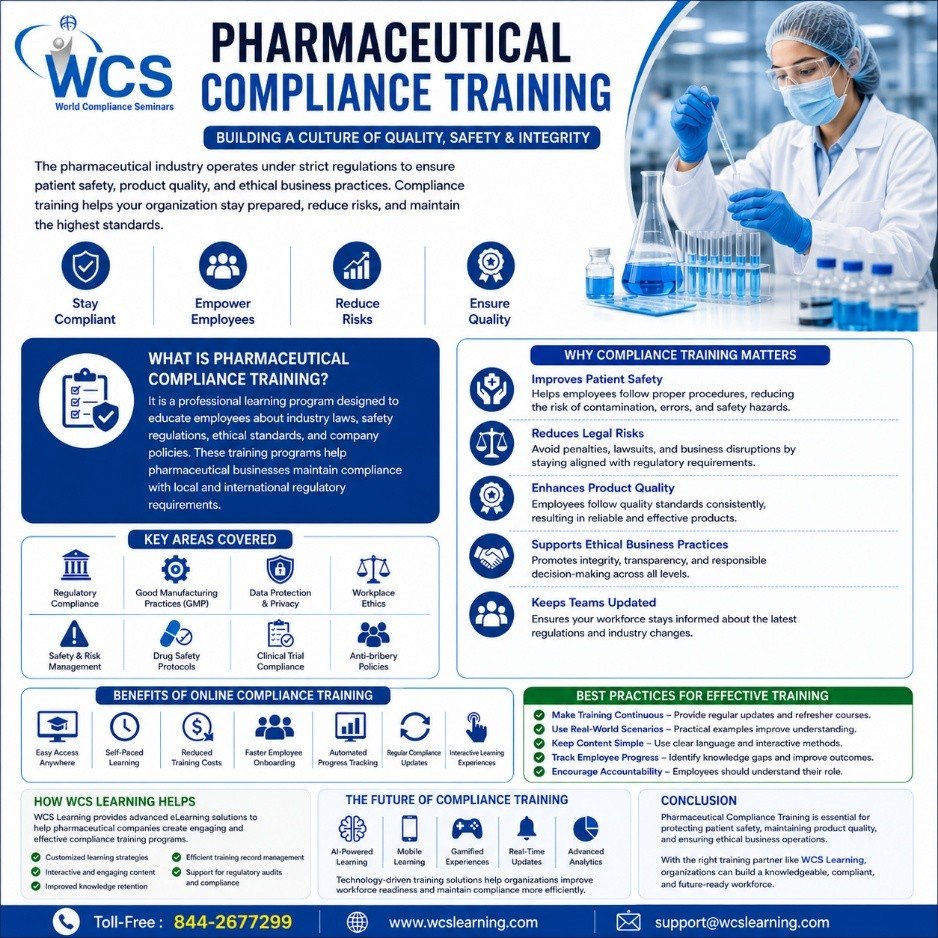
Pharmaceutical Compliance Training is designed to educate employees about the rules and standards that govern pharmaceutical operations. These programs ensure that staff members understand legal requirements and follow best practices during daily work activities.
Compliance training supports organizations in maintaining product quality, protecting patient safety, and avoiding costly violations. It also helps businesses create a more responsible and transparent work environment.
Why Pharmaceutical Companies Need Compliance Training
Regulatory agencies closely monitor pharmaceutical companies to ensure products are safe and effective. Even small compliance mistakes can lead to major financial losses, legal issues, or damage to brand reputation.
Main reasons compliance training is important:
- Ensures employees understand industry regulations
- Reduces the chance of compliance violations
- Improves operational consistency
- Supports patient and consumer safety
- Protects company reputation
- Encourages ethical workplace behaviour
- Helps businesses prepare for audits and inspections
Organizations that invest in regular training often experience better workflow management and stronger regulatory performance.
Essential Areas Covered in Compliance Training
A comprehensive Pharmaceutical Compliance Training program usually includes multiple subjects related to workplace safety, legal compliance, and quality management.
Key training topics include:
- Good Manufacturing Practices (GMP)
- Regulatory compliance standards
- Documentation and record management
- Data privacy and cybersecurity
- Quality assurance procedures
- Workplace health and safety
- Drug storage and handling
- Ethical conduct and anti-corruption policies
- Inspection readiness and audit management
- Risk assessment and reporting
These topics help employees perform their duties correctly while maintaining compliance with industry regulations.
Benefits of Digital Learning Solutions
Many pharmaceutical companies are moving toward digital training systems because they offer flexibility and better learning management. Online compliance programs make it easier for employees to access training materials anytime and anywhere.
Advantages of online pharmaceutical training:
- Flexible and self-paced learning
- Faster onboarding for new employees
- Easy updates for changing regulations
- Reduced training costs
- Better employee participation
- Centralized reporting and tracking
- Improved learning consistency
Digital learning also allows organizations to train global teams efficiently without disrupting daily operations.
How Training Improves Employee Confidence
Employees who receive proper compliance training are more confident in handling daily responsibilities. They understand workplace expectations and can make informed decisions that align with company policies.
Training programs also improve communication between departments and encourage accountability across the organization. This creates a more productive and compliant work culture.
Compliance-trained employees can:
- Handle documentation accurately
- Follow standard operating procedures correctly
- Respond better during inspections
- Reduce workplace mistakes
- Maintain higher quality standards
- Support safer operational practices
A knowledgeable workforce plays a major role in long-term business success.
Choosing the Right Compliance Training Partner
Selecting the right training provider is important for achieving effective results. Businesses should choose providers with experience in healthcare and pharmaceutical education.
When evaluating training solutions, companies should consider:
- Industry-specific expertise
- Updated regulatory content
- Interactive learning methods
- Easy-to-use training platforms
- Scalable learning options
- Progress tracking and analytics
- Reliable customer support
WCS Learning offers customized learning solutions that help organizations strengthen compliance knowledge and workforce performance.
Future Trends in Pharmaceutical Compliance Training
Technology continues to transform how pharmaceutical companies train employees. Modern learning systems are becoming more interactive, data-driven, and personalized.
Emerging training trends include:
- AI-powered learning platforms
- Mobile-friendly compliance modules
- Virtual reality safety simulations
- Gamified employee training
- Real-time performance tracking
- Cloud-based learning management systems
These innovations help companies improve engagement while keeping employees updated with evolving regulations.
Conclusion
Pharmaceutical Compliance Training is essential for maintaining high standards in the healthcare and pharmaceutical industries. It helps organizations reduce risks, improve employee awareness, and strengthen regulatory compliance.
As industry regulations continue to evolve, businesses must prioritize continuous learning and workforce development. Partnering with experienced providers like WCS Learning can help companies create effective compliance programs that support long-term growth and operational excellence.
A well-trained workforce not only improves compliance but also contributes to safer products, stronger business performance, and greater customer trust.
Toll Free : 844-267-7299
FAQ
1. What is Pharmaceutical Compliance Training?
Pharmaceutical Compliance Training helps employees understand industry regulations, safety standards, ethical guidelines, and legal requirements within pharmaceutical organizations.
2. Why is eLearning important in pharmaceutical compliance?
eLearning provides flexible, scalable, and cost-effective training solutions that improve employee engagement and knowledge retention.
3. How does AI improve compliance training?
AI personalizes learning experiences, identifies skill gaps, and delivers customized training modules based on employee performance.
4. What is microlearning in compliance training?
Microlearning delivers short and focused training modules that are easier to understand and remember.
5. How does gamification help compliance training?
Gamification increases employee participation and motivation through rewards, quizzes, challenges, and interactive learning activities.