
Businesses that guess are losing to businesses that predict. In 2026, predictive analytics has moved from a “nice-to-have” data science project to a core business function that drives revenue, reduces risk, and improves customer experience across every industry. If you are still relying on historical reports and gut feeling to make decisions, you are already behind competitors who use predictive models to see what is coming next.
This guide breaks down exactly how to master predictive analytics in 2026 — from understanding the fundamentals to implementing AI-driven forecasting models that actually move the needle for your business. Whether you run an e-commerce store, a service business, or a growing agency, the principles below will help you build a forecasting system that improves decision-making instead of adding more dashboards nobody looks at.
What Is Predictive Analytics?
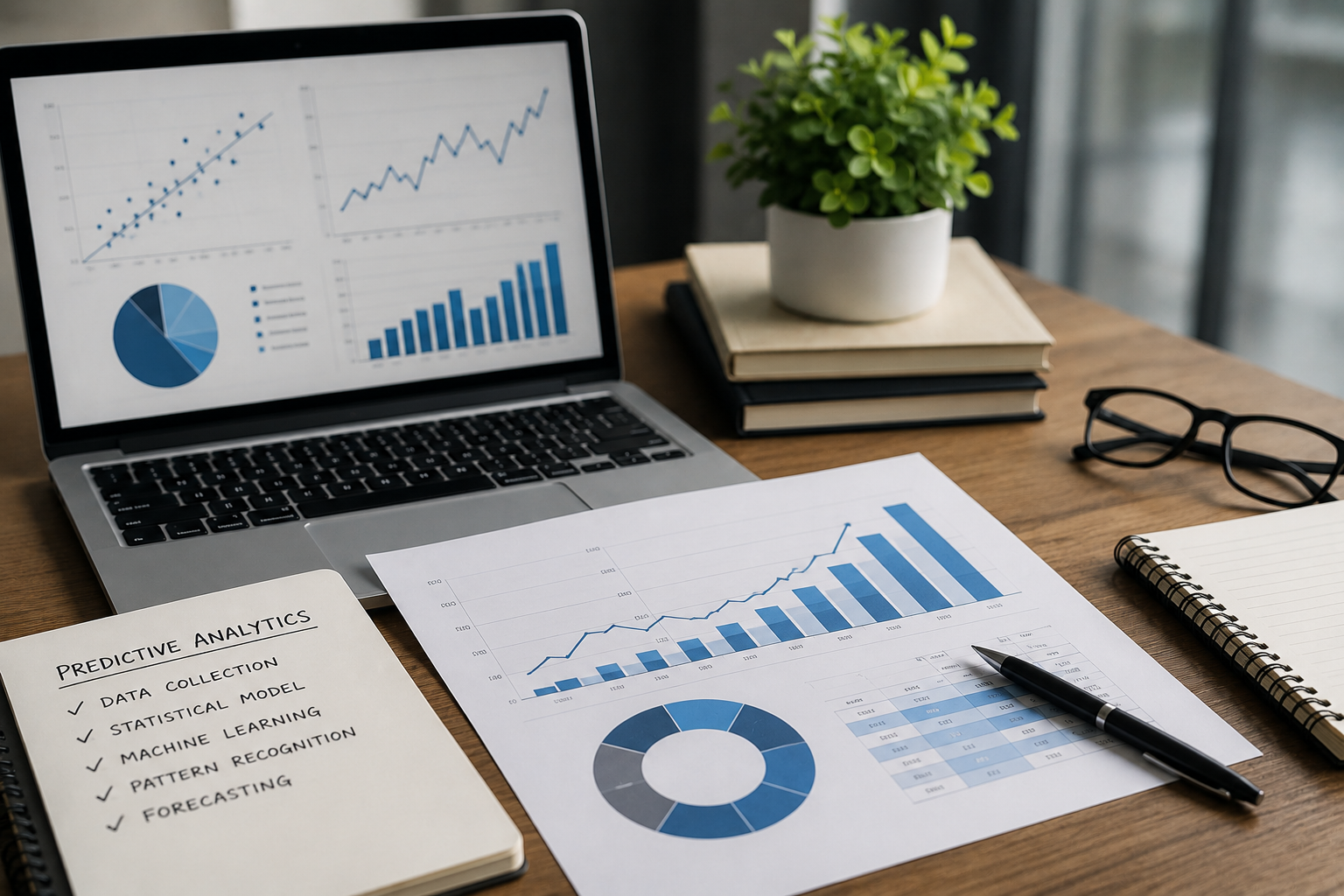
Predictive analytics is the use of historical data, statistical algorithms, and machine learning techniques to forecast future outcomes. Instead of only reporting what already happened, predictive analytics tells you what is likely to happen next — whether that is a customer churning, a product going out of stock, or a website losing search rankings.
It combines three core elements: clean data, the right algorithm, and a clear business question. Get all three right, and predictive analytics becomes one of the most valuable tools in your growth strategy.
Why Predictive Analytics Matters More in 2026
The predictive analytics market is expanding rapidly as more industries adopt AI-driven forecasting. Analysts project the global predictive analytics market to grow into the tens of billions of dollars by the early 2030s, with a compound annual growth rate well above 20 percent. This growth is being driven by cheaper computing power, wider access to AI tools, and businesses demanding faster, data-backed decisions.
In 2026 specifically, predictive analytics is no longer limited to large enterprises with dedicated data science teams. No-code and AI-powered platforms now let small and mid-sized businesses build accurate forecasting models without writing a single line of code. This is a major shift — and it means the businesses that master predictive analytics early will have a real competitive advantage.
Top Predictive Analytics Trends to Watch in 2026
To truly master predictive analytics this year, you need to understand where the technology is heading. Here are the key trends shaping 2026:
- AI Accountability and ROI Tracking: Businesses now demand measurable ROI from every predictive model, tying forecasts directly to revenue, cost savings, and customer satisfaction scores.
- Agentic AI in Analytics: AI agents are handling multi-step forecasting tasks automatically, with human checkpoints only for high-risk decisions.
- Real-Time Predictive Models: Static, monthly forecasts are being replaced by models that update continuously as new data flows in.
- Synthetic Data Adoption: Companies are using AI-generated synthetic datasets to train models faster while protecting customer privacy.
- Democratized, No-Code Analytics: Business teams, not just data scientists, are now building and using predictive dashboards directly.
- Embedded Predictive Analytics: Forecasting is being built directly into everyday tools like CRMs, e-commerce platforms, and marketing dashboards instead of separate BI software.
Real-World Use Cases of Predictive Analytics in 2026
Predictive analytics is delivering measurable results across nearly every industry. Here is how businesses are applying it right now:
- Retail and E-commerce: Forecasting demand, optimizing inventory, and predicting which products customers are likely to buy next based on browsing and purchase history.
- Healthcare: Predicting patient risk, hospital readmission rates, and equipment maintenance needs before failures occur.
- Finance and Banking: Detecting fraudulent transactions in real time and forecasting credit risk more accurately than traditional scoring models.
- Education Consultancy: Predicting which students are most likely to convert into enrolled applicants, helping consultancies prioritize follow-ups and improve admission rates.
- Travel and Hospitality: Forecasting seasonal demand and pricing trends to optimize bookings and marketing spend.
- Digital Marketing and SEO: Predicting keyword trends, content performance, and ranking opportunities before competitors act on them.
Step-by-Step: How to Master Predictive Analytics in 2026
Mastering predictive analytics is not about learning complex math overnight. It is about following a proven process. Here is the step-by-step approach businesses are using successfully in 2026:
Step 1: Define a Clear Business Question
Every successful predictive analytics project starts with a specific, measurable question — not “analyze our data,” but “which customers are most likely to churn in the next 30 days?” A clear question determines what data you need and what success looks like.
Step 2: Collect and Clean Your Data
Predictive models are only as good as the data behind them. Focus on removing duplicates, fixing missing values, and connecting data sources such as your website, CRM, and sales platforms into one clean dataset.
Step 3: Choose the Right Model or Tool
Not every business needs complex machine learning. Simple models like linear regression work well for straightforward forecasting, while advanced businesses use decision trees or XGBoost for higher accuracy on complex datasets. Choose based on your data volume and the complexity of the question.
Step 4: Train, Test, and Validate the Model
Split your data into training and testing sets to check accuracy before trusting any prediction. A model that performs well on old data but fails on new data needs retraining, not deployment.
Step 5: Integrate Predictions Into Daily Decisions
A forecast is only valuable if people actually use it. Connect predictive outputs directly into dashboards, CRMs, or marketing tools so your team can act on insights in real time instead of digging through spreadsheets.
Step 6: Monitor, Retrain, and Improve
Markets change, customer behavior shifts, and old models lose accuracy over time. Set a regular schedule — monthly or quarterly — to review model performance and retrain with fresh data.
Popular Predictive Analytics Tools and Algorithms in 2026
Here are the tools and techniques businesses are relying on this year:
- Linear Regression — simple, explainable forecasting for sales and revenue trends
- Decision Trees — easy-to-understand, rule-based predictions
- XGBoost — high-accuracy predictions by combining multiple decision trees
- Time Series Models — ideal for seasonal and time-based forecasting
- No-Code AI Platforms — drag-and-drop forecasting for non-technical teams
- Cloud-Based Analytics Suites — scalable, pay-as-you-go predictive analytics infrastructure
Common Challenges Businesses Face
- Poor data quality leading to inaccurate predictions
- Lack of in-house skills to interpret model outputs correctly
- Choosing overly complex models when a simple one would work better
- Failing to update models regularly, causing “model drift” over time
- Not connecting predictions to actual business workflows
How Predictive Analytics Drives SEO and Digital Marketing Success
Predictive analytics is not just for finance or operations teams — it is transforming digital marketing and SEO. Businesses now use predictive models to forecast which keywords will trend, which content topics will drive the most traffic, and which website changes are likely to improve rankings before they are even implemented.
For businesses that want to combine predictive data with proven SEO execution, working with SEO and digital marketing experts like Vijay SEO helps turn forecasting insights into real rankings, traffic, and lead generation. From technical SEO to AI-driven content strategy, predictive data works best when paired with hands-on execution.
Best Practices to Get the Most From Predictive Analytics
Following the right process is important, but a few best practices separate businesses that get real value from predictive analytics from those that just collect dashboards nobody uses:
- Start small: Pick one high-impact question, such as customer churn or lead scoring, before scaling to enterprise-wide forecasting.
- Involve business teams early: Sales, marketing, and operations teams should help define what “useful” predictions look like, not just the data team.
- Prioritize explainability: A model your team can understand and trust gets used far more than a “black box” model, even if it is slightly less accurate.
- Document assumptions: Every model is built on assumptions about the market. Write them down so you know when it is time to retrain.
- Treat it as ongoing, not one-time: Predictive analytics is a continuous cycle of forecasting, measuring, and improving — not a project with a finish line.
Frequently Asked Questions
1. Is predictive analytics only for large companies?
No. In 2026, no-code and AI-powered platforms make predictive analytics accessible to small and mid-sized businesses. You no longer need an in-house data science team to start forecasting.
2. How accurate is predictive analytics?
Accuracy depends on data quality and the model used. Well-maintained models with clean, regularly updated data can reach high accuracy for tasks like demand forecasting, churn prediction, and fraud detection, though no model is ever 100 percent certain.
3. What is the difference between predictive and descriptive analytics?
Descriptive analytics explains what has already happened using historical data. Predictive analytics goes a step further by using that data to forecast what is likely to happen next.
4. How long does it take to see results from predictive analytics?
Simple models can produce usable forecasts within weeks. More complex, enterprise-wide predictive systems typically take a few months to fully implement, test, and integrate into daily workflows.
Final Thoughts
Mastering predictive analytics in 2026 is not about having the biggest data team — it is about asking the right questions, using clean data, choosing the right tools, and acting on insights consistently. Businesses that build this habit now will out-forecast, out-rank, and outgrow their competitors.
Ready to turn predictive insights into measurable business growth? Visit Vijay SEO to explore SEO, AI optimization, and digital marketing services built to help your business rank higher and convert better in 2026.