

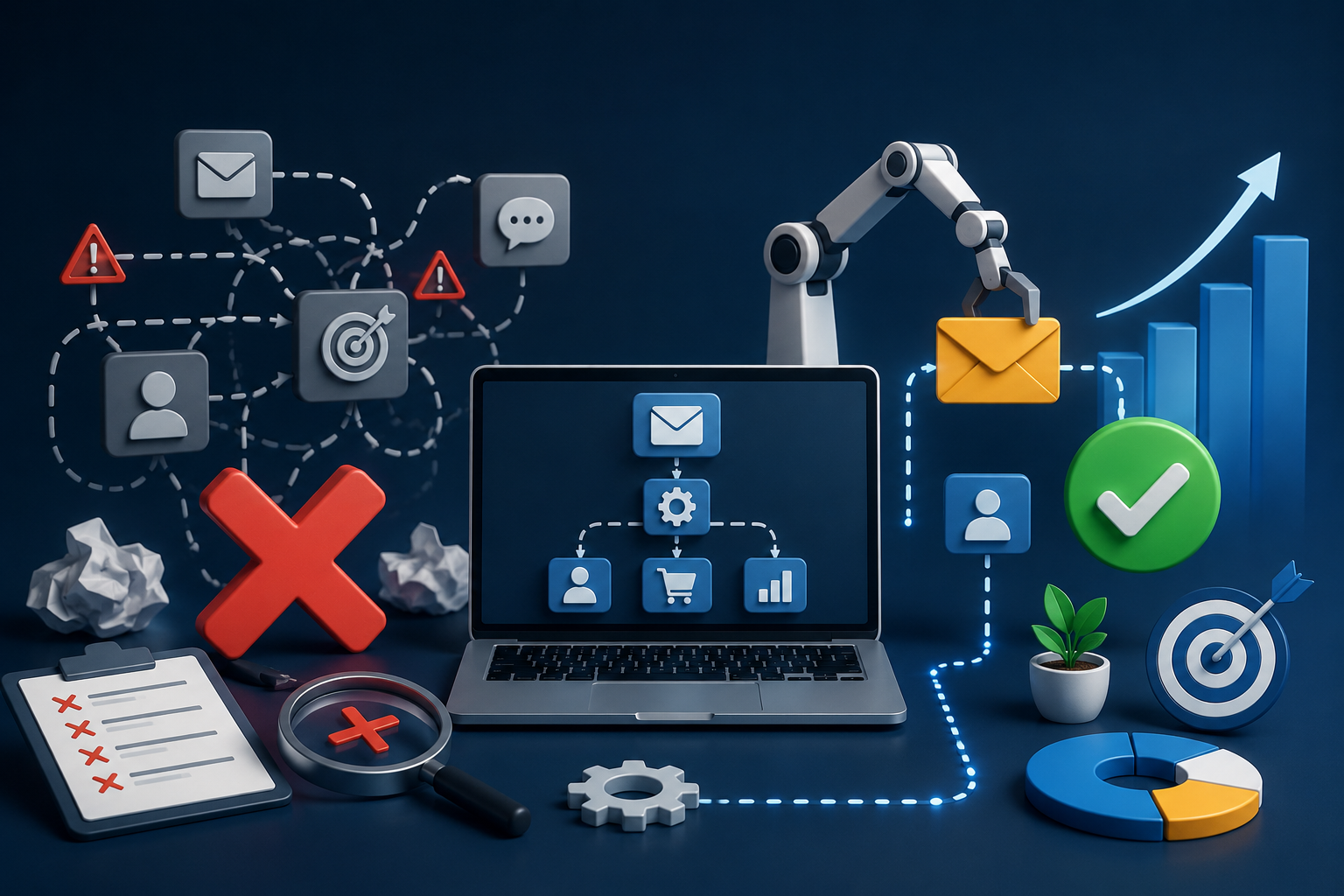
Marketing automation promises more leads, less manual work, and higher revenue. But when it’s set up the wrong way, it does the opposite, wasting budget, annoying prospects, and hiding your best leads in a broken workflow. Whether you’re using HubSpot, Mailchimp, ActiveCampaign, or Zoho, the tool is never the real problem, the strategy behind it is.
Every year, businesses invest heavily in marketing automation software expecting it to run their lead generation on autopilot. Yet most see disappointing results, not because the technology fails, but because of avoidable setup and strategy errors. A single broken trigger, an unsegmented list, or a workflow with no clear goal can quietly drain your marketing budget for months before anyone notices.
This guide breaks down 25 marketing automation mistakes businesses make most often, grouped into five practical categories, along with simple fixes for each. Whether you’re just starting with automation or already running multiple workflows, reviewing this list will help you plug the leaks in your funnel and turn automation into a genuine revenue driver.
If you want expert help building automation and SEO strategies that actually convert, Vijay SEO offers complete digital marketing automation, SEO, website development, and lead generation services tailored to your business goals.
Strategy & Planning Mistakes
1. Automating Without a Clear Strategy
Turning on automation tools before defining goals, buyer journeys, and KPIs leads to wasted spend and irrelevant messaging. Businesses often buy expensive software expecting instant results, but automation only amplifies whatever strategy you feed it. Map your funnel, define your ideal customer, and set clear outcomes first, then automate.
2. Trying to Automate Everything at Once
Automating every channel simultaneously overwhelms teams and breaks quality control. It also makes it nearly impossible to identify which workflow is actually driving results. Start with one high-impact workflow, such as welcome emails or abandoned cart follow-ups, get it performing well, and then expand step by step.
3. Ignoring the Buyer’s Journey
Sending the same automated message to a first-time visitor and a returning customer kills conversions. A cold lead needs education and trust-building, while a warm lead needs a clear offer. Build separate flows for awareness, consideration, and decision stages so each contact gets the right message at the right time.
4. No Defined Goals or KPIs
Without measurable targets like open rate, click-through rate, cost per lead, or lead-to-customer ratio, you cannot judge if automation is actually working. Many businesses run automation for months without ever reviewing performance. Set clear benchmarks before launch and revisit them monthly.
5. Copying Competitor Workflows Blindly
What works for another brand’s audience may not fit yours, especially if their industry, price point, or customer intent is different. Automation flows should be built around your own customer data, past campaign performance, and real behaviour patterns, not guesswork borrowed from a competitor’s funnel.
Data & List Management Mistakes
6. Using Dirty or Outdated Contact Data
Automating campaigns on unverified, outdated, or purchased email lists increases bounce rates and damages sender reputation with email providers. Once your domain is flagged, even genuine leads stop receiving your emails. Clean your database regularly and remove inactive or invalid contacts.
7. Weak or No Audience Segmentation
Blasting one generic message to your entire list reduces engagement and increases unsubscribes. Segment your audience by industry, location, behaviour, purchase stage, or past interactions. Even basic segmentation, like separating new leads from existing customers, can significantly improve open and click rates.
8. Ignoring Data Privacy and Consent Rules
Automated emails sent without proper consent or opt-in records can lead to spam complaints, blacklisting, and legal penalties under data protection regulations. Always maintain clear permission records, provide an easy unsubscribe option, and be transparent about how contact data is collected and used.
9. Not Syncing CRM and Marketing Automation Tools
When your CRM and automation platform don’t talk to each other, sales and marketing end up working with mismatched, duplicate, or outdated data. This causes missed follow-ups, double outreach to the same lead, and lost revenue. Integrate your CRM and automation tools so both teams see one accurate source of truth.
10. Letting Duplicate Contacts Pile Up
Duplicate records trigger repeated emails to the same person, which feels unprofessional and hurts your brand’s credibility. It also skews your reporting, making campaigns look less effective than they actually are. Run regular data hygiene checks to merge duplicates and keep your list clean.
Email & Content Automation Mistakes
11. Over-Automating Email Frequency
Sending too many automated emails in a short span leads to unsubscribes, spam flags, and a damaged sender reputation. More emails do not always mean more conversions. Space out your sequences based on engagement signals and give contacts room to respond before the next message goes out.
12. Generic, One-Size-Fits-All Content
Automation without personalization feels robotic and disconnected. Use dynamic fields like name, company, location, and past behaviour to make every message feel relevant and timely. Even small personal touches can noticeably improve open rates and replies.
13. Ignoring Mobile Optimization
Most emails, landing pages, and forms are opened on mobile devices first. Automated content that isn’t mobile-friendly, with tiny text, broken buttons, or slow-loading pages, loses conversions instantly. Always preview and test every automated asset on mobile before it goes live.
14. Weak or Missing Calls-to-Action
Automated content without a clear, single next step wastes the opportunity you worked hard to create. Every email, landing page, or message should guide the reader toward one specific action, whether that’s booking a call, downloading a guide, or completing a purchase.
15. Not A/B Testing Automated Sequences
Assuming your first automated flow is perfect is a costly mistake. Subject lines, send times, content length, and CTA placement all affect performance differently across audiences. Test one variable at a time and let real data guide your improvements.
Workflow & Technical Mistakes
16. Broken or Incomplete Workflow Logic
Missing decision branches or dead ends in automation flows cause leads to fall through the cracks with no follow-up at all. Map every possible path, including what happens if someone doesn’t open, click, or respond, before the workflow goes live.
17. Not Testing Workflows Before Launch
Publishing automation without a full end-to-end test run often reveals broken links, wrong trigger conditions, or formatting errors only after real leads have already been affected. Always run a test contact through the entire workflow before activating it for your full audience.
18. Setting Wrong Trigger Conditions
Incorrect triggers, such as firing a workflow on the wrong form submission or the wrong tag, send irrelevant messages and confuse your audience. Double-check every trigger condition and test with sample data before the workflow is live.
19. Neglecting Lead Scoring Rules
Without proper lead scoring, sales teams waste time chasing cold leads while genuinely interested, high-intent prospects go unnoticed. Automate scoring based on real engagement signals like email opens, page visits, and form fills so sales can prioritize the right contacts.
20. Failing to Update Workflows Over Time
Automation set up once and never revisited quickly becomes outdated as products, offers, pricing, and audience behaviour change. Old promotions, broken links, or outdated pricing left running for months can actively hurt conversions. Review and refresh every workflow at least once a quarter.
Measurement & Optimization Mistakes
21. Not Tracking ROI of Automation Campaigns
Running automation without measuring revenue impact makes it impossible to justify the tool’s cost or prove its value to stakeholders. Track cost-per-lead, cost-per-acquisition, and overall conversion value generated by each workflow, not just vanity metrics like open rate.
22. Ignoring Analytics and Reports
Automation platforms provide detailed performance data on every email, page, and workflow step, but many businesses never review it. Regular analysis reveals exactly what to fix, what to scale, and where leads are dropping off in the funnel.
23. Relying Only on Automation With No Human Touch
Full automation without any human follow-up on high-value leads feels impersonal and can cost you big deals. Blend automation with personal outreach, especially for enterprise leads, high-ticket services, or contacts showing strong buying signals.
24. Not Aligning Automation With SEO and Content Strategy
Marketing automation works best when paired with strong organic content and keyword-optimized landing pages that attract the right leads in the first place. Without SEO driving quality traffic, even the best automation workflow has little to work with.
25. Choosing the Wrong Automation Tool for Business Size
Using an enterprise-grade platform for a small business, or a basic tool for a large operation, leads to wasted budget or missing features. Match the automation tool to your business size, technical capability, and actual growth goals rather than choosing based on brand popularity alone.
Quick Checklist to Avoid Automation Mistakes
- Define clear goals and KPIs before building any workflow
- Segment your audience instead of sending generic blasts
- Clean your contact database every quarter
- Test every workflow end-to-end before launch
- Review analytics monthly and optimize based on data
- Combine automation with human follow-up for high-value leads
- Align automation campaigns with your SEO and content strategy
Frequently Asked Questions
1. What is the biggest marketing automation mistake businesses make?
The most common and costly mistake is automating without a clear strategy or defined goals. Businesses turn on tools and workflows before mapping the buyer’s journey, which leads to irrelevant messaging, poor targeting, and low ROI.
2. How often should marketing automation workflows be reviewed?
Workflows should be reviewed at least once every quarter. Products, offers, pricing, and audience behaviour change over time, and outdated automation can quietly hurt conversions if left untouched for too long.
3. Can small businesses benefit from marketing automation?
Yes. Small businesses often see the fastest ROI from automation because it saves time on repetitive tasks like follow-up emails and lead nurturing. The key is choosing a tool that matches the business size and starting with one simple workflow.
4. Does marketing automation replace the need for SEO?
No. Automation nurtures and converts leads, but SEO and content strategy are what bring qualified traffic and leads into the funnel in the first place. The two work best together, not as replacements for each other.
5. How can I fix a poorly performing automation workflow?
Start by reviewing analytics to find where leads drop off, checking trigger conditions and segmentation, and A/B testing subject lines, content, and send times. Small, data-driven adjustments often improve performance significantly without rebuilding the entire workflow.
Final Thoughts
Marketing automation is a powerful growth tool, but only when it’s built on the right strategy, clean data, and continuous optimization. Avoiding these 25 mistakes will help you generate better quality leads, improve conversions, and get a real return on your automation investment.
Automation is not a set-it-and-forget-it solution. It needs regular testing, clean data, thoughtful segmentation, and content that speaks directly to each stage of your buyer’s journey. Businesses that treat automation as an ongoing process, rather than a one-time setup, consistently see better lead quality, higher conversion rates, and stronger long-term ROI.
Need help fixing your automation, SEO, and lead generation funnel? Explore Vijay SEO’s Digital Marketing Services for SEO, website development, PPC, and marketing automation support built for real business growth.