

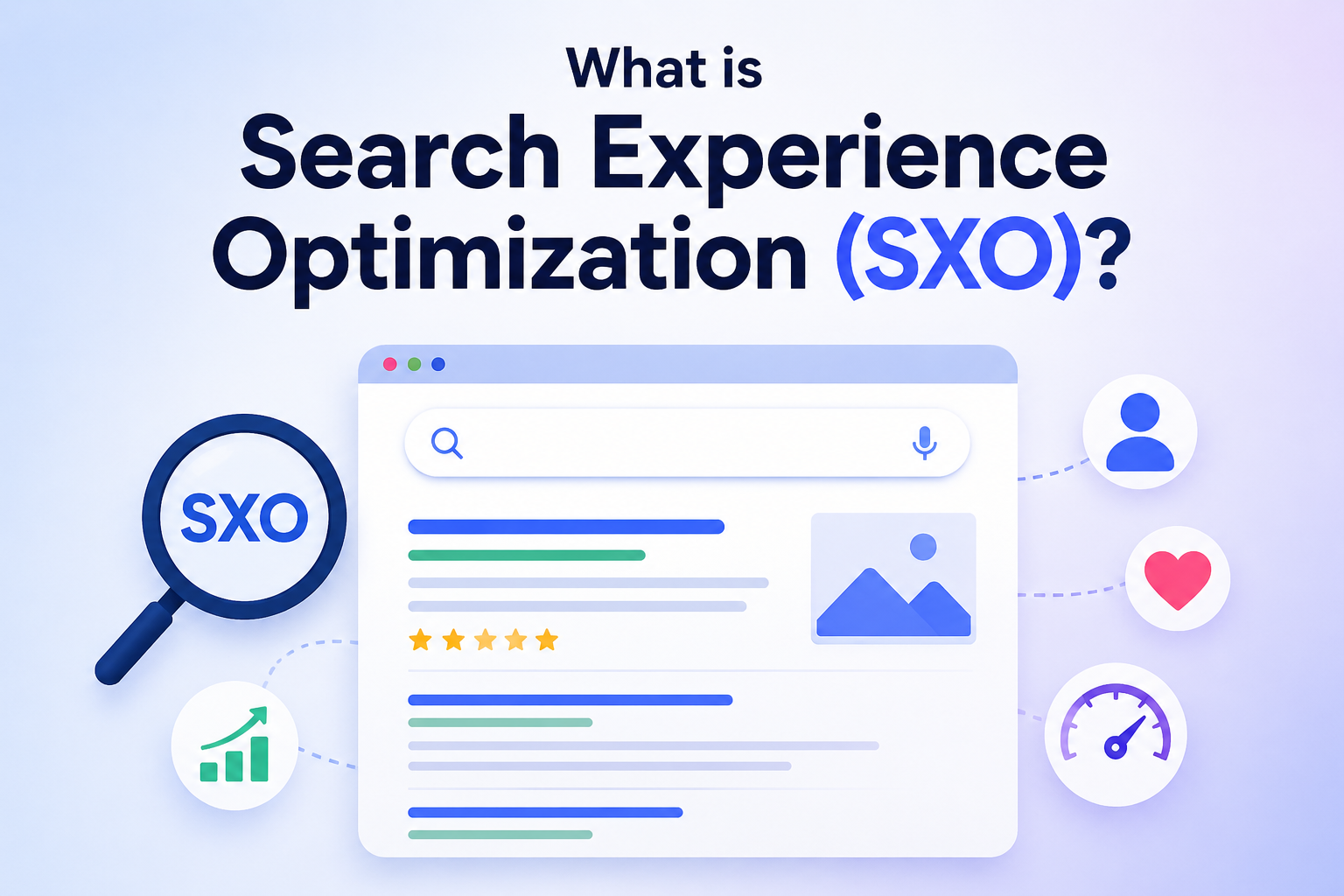
Search Experience Optimization (SXO) is a modern approach that combines traditional SEO with user experience (UX) and conversion optimization. Instead of focusing only on rankings, SXO ensures that users not only find your website but also stay, engage, and take action.
In today’s AI-driven search landscape, simply appearing on search engine results pages is not enough. Search engines now evaluate how users interact with your content. SXO bridges this gap by aligning search intent, content quality, and on-site experience.
Why SXO Matters in 2026
Search engines have evolved beyond keyword matching. They now prioritize helpful content, fast-loading pages, and meaningful user engagement. Metrics like bounce rate, dwell time, and page experience signals play a crucial role in rankings.
SXO helps businesses:
- Improve visibility and user satisfaction
- Reduce bounce rates and increase engagement
- Turn organic traffic into real conversions
- Build trust and credibility with users
Key Elements Of SXO
- Search Intent Optimization
Understanding what users truly want is the foundation of SXO. Content should match informational, navigational, or transactional intent to deliver value.
- High-Quality Content
Content must be clear, relevant, and useful. It should answer user queries effectively while maintaining readability and structure.
- User Experience (UX)
A smooth and intuitive website experience is essential. This includes:
- Fast page loading speed
- Mobile-friendly design
- Easy navigation
- Engagement Signals
Search engines track how users behave on your site. Longer sessions and meaningful interactions signal quality and relevance.
- Conversion Optimization
SXO focuses on guiding users toward action whether it’s filling out a form, making a purchase, or contacting your business.
SXO vs Traditional SEO
Traditional SEO is primarily about rankings and visibility. SXO, on the other hand, goes further by optimizing the entire user journey. It ensures that once users land on your website, they have a positive and productive experience.
In simple terms:
SEO brings users in, SXO keeps them engaged and converts them.
How to Implement SXO
To adopt SXO effectively:
- Create content that solves real user problems
- Improve website speed and usability
- Use clear headings and structured layouts
- Optimize for mobile-first experiences
- Continuously analyze user behavior and refine strategies
Final Thoughts
As search engines become more user-centric, businesses must focus on delivering value beyond rankings. By combining SEO, UX, and conversion strategies, SXO helps you create meaningful experiences that drive both traffic and results.