

Imagine pouring time, energy, and resources into driving thousands of visitors to your online storefront, only to watch them browse for a few seconds and leave without spending a dime or dropping an email address. This is a common and incredibly frustrating scenario for digital marketers and business owners alike. Traffic is fantastic, but traffic without action is essentially just a vanity metric that doesn’t pay the bills.
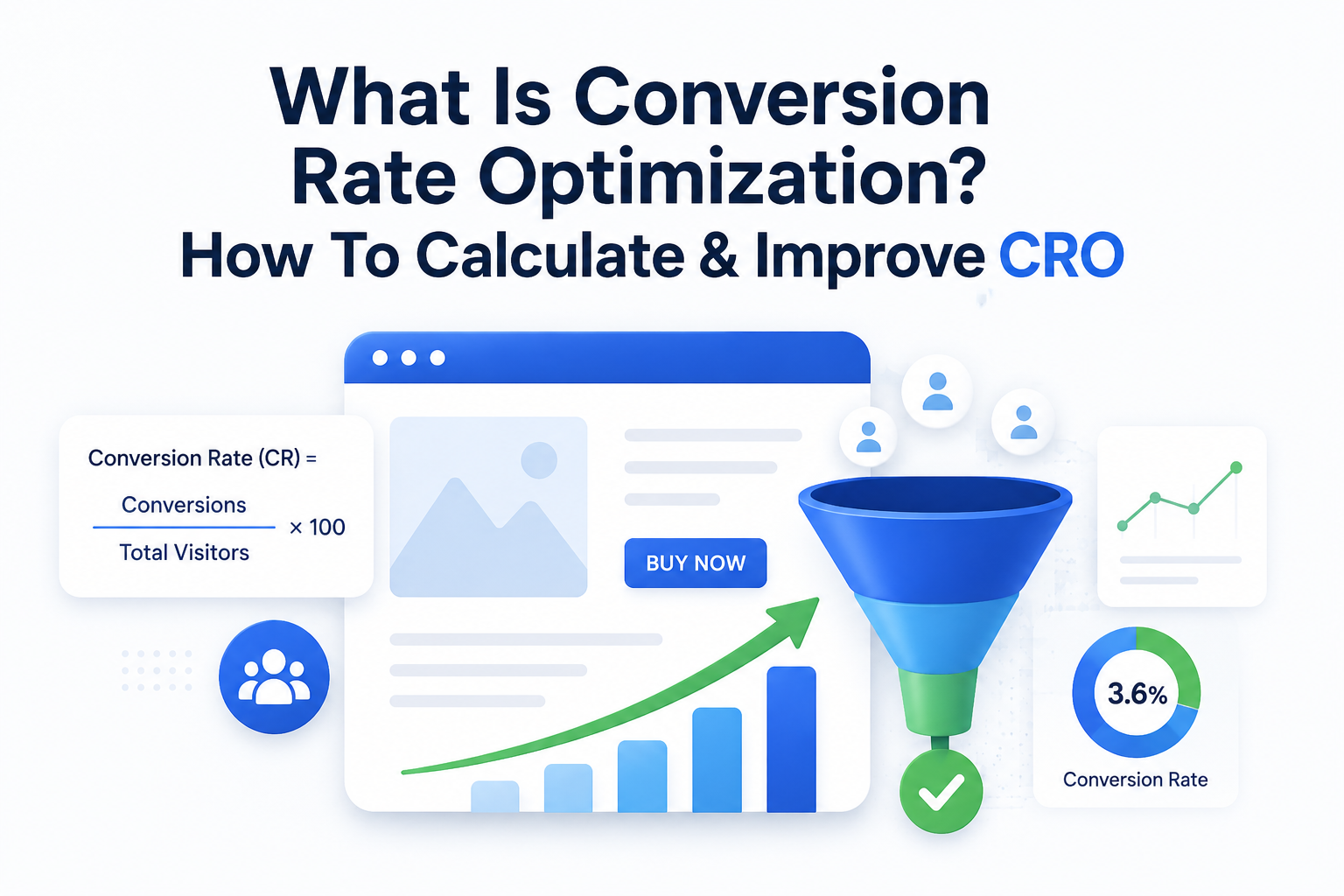
This is precisely where the magic of conversion rate optimization comes into play. By definition, CRO is the systematic, data-driven process of increasing the percentage of website visitors who take a desired, profitable action. This action or “conversion” could be anything from purchasing a physical product and subscribing to a weekly newsletter to filling out a lead generation contact form or downloading a digital guide. Essentially, it is about making your current traffic work harder and smarter for your business’s bottom line.
How to Measure Your Baseline
Before you can improve your metrics, you need to understand exactly where you currently stand. Learning how to calculate conversion rate is your first foundational step in this journey, and the math is surprisingly straightforward.
You simply take the total number of conversions (the desired actions taken by users) and divide that by the total number of visitors to your site or specific landing page during a set timeframe. Finally, you multiply that result by 100 to get a clean percentage.
The Formula: (Total Conversions / Total Visitors) x 100 = Conversion Rate %
For instance, if your online store had 5,000 unique visitors last month and 100 of those visitors made a purchase, your formula would look like this: (100 / 5,000) x 100 = 2%.
That 2% is your current baseline. Tracking this number meticulously allows you to measure the direct, tangible impact of any design or copy changes you make to your digital presence moving forward.
Why Optimization Matters Now More Than Ever
Why should you care so deeply about this specific metric? Maximizing your website conversions is arguably the most cost-effective way to scale and grow your business today. Instead of constantly pouring larger budgets into advertising platforms to acquire net-new visitors which is becoming increasingly expensive in a highly competitive digital landscape this process focuses on capitalizing on the users who are already showing intent by visiting your pages.
A higher conversion rate translates directly to a better return on investment (ROI) for every single marketing campaign you run. Furthermore, the methodical process of optimization forces you to understand your target audience on a much deeper psychological level. You learn what messaging resonates with them, what interface elements confuse them, and what ultimately drives their purchasing decisions.
Actionable Strategies to Elevate Performance
If you are looking to actively improve CRO, you must adopt a mindset of continuous testing and refinement. Assumptions are the enemy of digital optimization; hard data is your best friend. Here are several proven, high-impact strategies to elevate your website’s performance:
- Prioritize Seamless Digital Navigation: Modern digital consumers have incredibly short attention spans and exceedingly high expectations. If your site is slow to load, difficult to navigate, or looks broken on a smartphone, visitors will abandon ship immediately and head to a competitor. Enhancing the overall user experience by decluttering page layouts, improving backend page load speeds, and ensuring flawless mobile responsiveness removes friction from the buyer’s journey.
- Optimize Your Call-to-Action (CTA): Your CTA button is the crucial tipping point between a bounce and a successful conversion. It needs to be visually striking, logically placed within the reading flow, and highly action-oriented. Instead of a generic and passive “Submit,” try something compelling, specific, and value-driven like “Get Your Free Guide Now” or “Start My 14-Day Trial.”
- Implement Rigorous A/B Testing: This is the absolute cornerstone of effective optimization. A/B testing (or split testing) involves creating two slightly different versions of a web page changing perhaps the main headline, the CTA button color, or the hero image and showing them to different segments of your live audience at the same time. The version that yields the higher conversion rate wins and becomes your new standard.
- Leverage Social Proof and Trust Signals: People inherently buy from brands they trust. If a visitor is on the fence about handing over their credit card information, seeing that others have had a positive experience can push them over the edge. Incorporate genuine customer reviews, detailed case studies, video testimonials, and recognizable security badges near your checkout or lead capture forms to ease anxiety.
- Simplify Forms and Checkout Processes: Every extra field you ask a user to fill out acts as a hurdle blocking your finish line. If you only need a first name and an email address to send a newsletter, do not ask for a phone number, company name, or physical address. Streamline your checkout process to require the absolute minimum number of clicks, page loads, and keystrokes.
Ultimately, optimizing your website is not a one-and-done weekend project. It is an ongoing, cyclical process of hypothesizing, testing, analyzing, and implementing. By deeply understanding your audience’s behavior and systematically removing barriers to action, you can dramatically increase your revenue without needing to drastically increase your traffic generation budget.